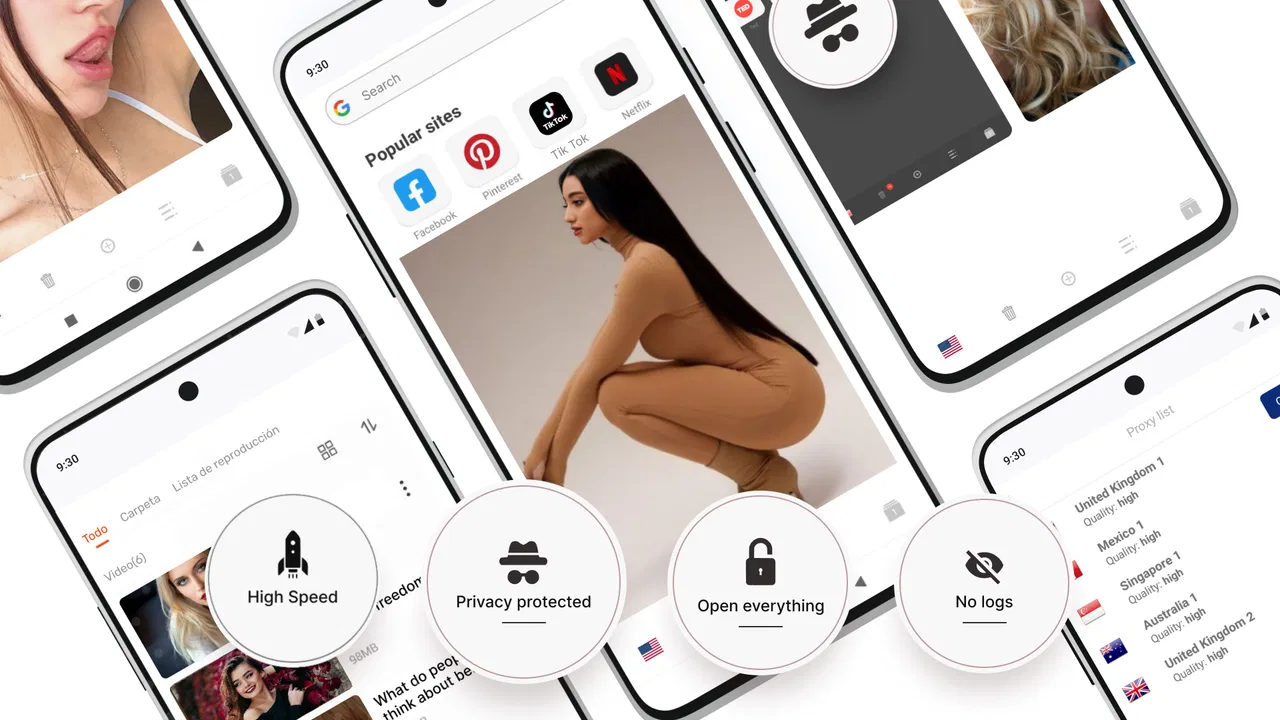
Proxy Browser
- 3.8
- Rating
- 100.00M
- Installs
- Free
- Price

 Analysis by App-foxy
I approached Proxy Browser as a practical privacy tool rather than as a replacement for every browser on my phone. Its purpose is straightforward: it gives me a browser experience built around proxy use, which can be useful when I want an extra layer between my device and the websites I visit. The app is free to install, belongs to the tools category, and comes from DS tools. After spending time with it, my impression is that its value depends less on flashy extras and more on whether proxy-based browsing fits the way you use the internet.
The first thing I would tell a friend is to keep expectations realistic. A proxy can change the route between your device and a website, but it is not a magic privacy shield. I still need to think carefully about the accounts I sign into, the information I share, and whether a website works properly through an intermediary connection. That distinction matters because the app’s short store description is simply “Proxy Browser,” while its broader summary presents it as a privacy-focused browsing option. In practice, I see it as a focused tool for particular browsing situations, not an all-purpose security solution.
How Proxy Browser feels in everyday use
I find Proxy Browser easiest to judge when I start with one modest task, rather than expecting it to replace my usual browser. Its proxy-focused approach makes a separate browsing session possible, but it also means that page behavior and speed can vary with the route and the site. Before settling into a routine, I’d first get comfortable with the basic setup and choose a low-stakes page to test.
You May Also Like

 Blood Strike: 2.5 Anniversary
Blood Strike’s Loadouts Turn Every Drop Into a Tactical Gamble
A close look at Blood Strike’s custom loadouts: how fast access to signature weapons reshapes its battle royale rhythm, rewards preparation, and narrows the gap between fights.

 Pandora - Music & Podcasts
Pandora’s Music Is Easy to Start, but Harder to Recover
Pandora’s strength is its low-effort path from a seed to a station. Its weak spot is how much confidence it asks you to place in connection, setup, and quiet recovery.

 8 Ball Pool
 Is Built on Rivalries, Rematches, and Routine
A close look at the rivalries, rematches, shared routines, and unanswered safety questions that turn a quick pool match into a persistent mobile community.

 Samsung Music
’s Quiet Strength Is Playing What You Already Own
Its reach comes less from spectacle than from dependable access to a personal library. That simplicity is both the app’s strongest retention engine and its ceiling.

 AccuWeather: Weather Radar
AccuWeather Review: A Quick, Clear Forecast for Everyday Decisions
For everyday plans, the best forecast is the one you can understand quickly. AccuWeather makes rain timing, radar, and local conditions easy to act on, with a few trade-offs.

 Hill Climb Racing
Why Hill Climb Racing Still Turns Crashes Into One More Run
A tiny car, a bumpy hill and one more upgrade: Hill Climb Racing keeps resurfacing because its simple chaos makes every near-miss feel personal.
More From Our News Desk
View All News


Speed expectations depend on the route, not just the browser
When I judge a proxy browser, I do not look only at how quickly its interface opens. The important question is how long it takes for a page to travel through the proxy before it appears on screen. That extra route can make browsing feel less immediate than using the browser that came with my phone. Text-heavy pages may remain comfortable, while image-rich pages, embedded media, and sites with several scripts can feel more demanding.
This is the main trade-off I noticed in the concept itself: privacy-oriented routing can be more useful than raw speed in some situations, but it can also introduce delay. I would use Proxy Browser for reading, checking a page, or handling a short session where the proxy matters more than instant loading. I would be less enthusiastic about using it for large downloads, long video sessions, or anything where a stable high-speed connection is the priority.
A useful habit is to compare the same page at different times instead of judging the app from one slow moment. Network congestion, the website itself, and the proxy route can all affect the result. If a page feels sluggish, refreshing repeatedly is not always the best answer. I usually move on to a simpler page or return to my regular browser when the task is time-sensitive.
A realistic daily scenario
Imagine that I am using a shared Wi-Fi network in a café and want to read an article without using my normal browser session. I can open Proxy Browser for that limited task, avoid signing into sensitive accounts, read what I need, and then close the session. This is a sensible use because the app has a clear job and I am not asking it to manage every part of my online life.
That workflow also shows where the app’s limits become important. If I need to access banking, manage work documents, or enter personal details, I would not treat a proxy browser as the only protection. I would prefer a trusted connection and the official application or a well-established browser with clearly understood privacy controls. Proxy Browser makes more sense as a separate browsing space for lower-risk activities than as a blanket answer to online privacy.
What happens during heavier browsing
Short sessions are easier to evaluate because the app has fewer opportunities to encounter a difficult website. Heavy use is different. Several open pages, media-heavy websites, repeated redirects, and pages that depend on complex scripts can put more pressure on both the connection and the phone. Even without claiming a specific memory or battery result, I would expect this kind of workload to feel less comfortable than ordinary browsing.
My practical advice is to keep the session focused. Open only the pages you need, close pages that are no longer useful, and avoid treating this app as a permanent tab manager. That is not a criticism unique to Proxy Browser; it is a sensible way to use a specialized browser whose main reason for existing is the proxy path rather than a broad collection of productivity features.
There is also a trade-off between convenience and control. A normal browser is usually better when I want synchronized history, saved passwords, extensions, or a mature system for handling many tabs. Proxy Browser is more appealing when I want a distinct, purpose-driven browsing session. The more I ask it to behave like a full desktop-style browser, the less convincing its focused design becomes.
Stability and recovering from interruptions
Reliability is not only about whether an app crashes. For a proxy browser, I also care about what happens when the connection changes, a page stalls, or I leave the app and return later. Mobile networks move between conditions, Wi-Fi can drop briefly, and some websites do not behave well when traffic passes through an intermediary. Those are the moments when recovery matters most.
I would handle interruptions by first checking the connection rather than assuming the page itself is broken. If a refresh does not help, I would close that page and reopen it. For an important task, I would switch to my usual browser instead of repeatedly fighting a stalled session. This is one of the clearest differences between a focused utility and a primary browser: with the utility, I am willing to restart a task when its special purpose is useful, but I expect more graceful continuity from the browser I use all day.
Another recovery tip is to avoid entering information into a form immediately after a page has partially loaded. If the connection is unstable, a reload can erase what was entered or send me back to an earlier step. I prefer to wait until the page is fully usable, copy non-sensitive notes elsewhere when appropriate, and only then complete an action. That small change makes proxy-based browsing less frustrating.
Resource demands on different phones
Proxy Browser supports devices running Android 5.0 or later, so its compatibility reaches back to older phones as well as newer models. That broad range is helpful, but the experience will not be identical across every device. A recent phone with a strong connection should have more room for demanding pages, while an older phone may struggle sooner when websites load large images, animations, or multiple interactive elements.
I would be especially careful on a phone with limited free storage, modest memory, or an aging battery. I would keep the app updated to the current version, 5.0 RC1, and avoid leaving a large browsing session open while switching between several other apps. If the device already slows down during ordinary browsing, a proxy route may make the delay more noticeable because the network path itself is part of the experience.
The age rating is Everyone, which makes the app broadly approachable from a content-rating perspective. That does not mean every browsing activity is suitable for every user, though. Parents and less experienced users still need to understand that a privacy-oriented browser does not automatically make every website trustworthy. The app can change how browsing is routed; it cannot replace judgment about links, downloads, forms, or accounts.
Where it fits beside ordinary alternatives
Compared with the standard browser already installed on most phones, Proxy Browser has a narrower identity. The usual browser is generally the better choice for daily browsing, saved logins, familiar history, and websites that need maximum compatibility. It is also the option I would reach for when speed and continuity matter more than separating a particular session from my normal browsing routine.
Compared with a dedicated privacy browser, Proxy Browser’s appeal is its direct focus on proxy browsing. A specialized privacy browser may offer a broader set of privacy controls, clearer explanations, or more mature tools for managing tracking and identity separation, depending on the product. I would choose such an alternative when I want a complete privacy workflow rather than one proxy-centered browsing option.
Compared with a system-wide VPN, this app should be viewed differently. A VPN can be designed to cover traffic from multiple applications, while a browser-based proxy tool is limited to what happens inside its own browsing environment. If I need protection or routing for other apps, I would look at a reputable VPN service instead. If I only need a separate browser session, using a smaller, focused app can be simpler and less disruptive.
Free access and the paid layer
The app is free, which makes it easy to try without committing money at the start. There are in-app purchases ranging from $4.99 to $54.99 per item, so I would pay attention to what is offered before buying anything. The presence of purchases does not automatically make the free experience poor, but it does mean that I would not assume every useful option is included without checking the app’s own purchase screen.
My approach would be to use the free version for a real task first, not merely open it once and decide. I would test a few ordinary pages, see whether the connection suits my routine, and decide whether the privacy benefit is meaningful enough to justify spending money. If the app is only useful for occasional reading, paying may not make sense. If it becomes part of a regular, clearly defined workflow, the decision becomes more personal.
Who should use it and who should skip it
I think Proxy Browser is best for someone who wants a separate place for proxy-based browsing and understands the difference between routing traffic through a proxy and achieving complete anonymity. It can suit people who occasionally use public networks, want to keep a particular browsing session apart from their main browser, or prefer a lightweight tool with one obvious purpose.
I would skip it as a primary browser if I depend on seamless account management, extensive tab organization, password workflows, media-heavy websites, or consistent performance across complicated web applications. I would also avoid relying on it for sensitive transactions simply because the word “privacy” appears in its positioning. The safest choice depends on the task, the network, and how much trust I place in the service handling the connection.
For families, the Everyone rating may make the app seem immediately suitable, but I would still explain basic browsing safety before handing it to a child. For older phones, I would try a short session first and watch for slow page rendering or difficulty switching back to other apps. For travelers, I would treat it as one tool among several rather than assuming it will solve every connection problem.
What the numbers suggest about its place in the market
Proxy Browser has reached over one hundred million installs, with an average rating of 3.8 from around seven hundred ninety-three thousand ratings and roughly three thousand five hundred written reviews. That combination tells me the app has broad visibility and a substantial user base, but it is not a universal crowd-pleaser. A rating in that range usually encourages a closer look at personal needs instead of promising that every device and network will feel identical.
Its release date, December 22, 2018, also helps put the product in context. It is not a brand-new experiment, yet its current version is labeled 5.0 RC1, so I would still approach updates with the normal care I use for any tool that affects browsing. I would keep an eye on whether my important websites continue to behave properly after an update and avoid making it my only way to get online until I am comfortable with the current build.
My performance verdict
My final view is measured but positive: Proxy Browser is useful when I give it a specific job. Its strongest point is the ability to make proxy-based browsing available in a dedicated app, without forcing me to reorganize how every other app connects. Its weakest point is that the same proxy route can make speed, page compatibility, and recovery less predictable than they are in a conventional browser.
I would install it for occasional privacy-conscious browsing, quick sessions on networks I do not fully trust, or a separate space for lower-risk web reading. I would not replace my everyday browser with it unless my browsing habits were simple and the connection felt consistently comfortable. The free entry point makes testing easy, while the optional purchases mean I would judge the actual value before paying.
My recommendation is to treat Proxy Browser as a focused tool, not a complete privacy promise. If that distinction matches your needs, DS tools’ app is worth trying on an Android device running version 5.0 or newer. If your priority is maximum speed, complex websites, system-wide coverage, or dependable handling of sensitive accounts, a regular browser or a trusted VPN may be the better fit.
FAQs for Proxy Browser
01What is Proxy Browser and how does it work?
Proxy Browser is an application designed to enhance your online privacy by routing your internet traffic through a proxy server. This process masks your IP address, making it difficult for websites and third parties to track your browsing activities. It offers a secure way to access the web, especially useful in regions with restricted internet access.
02Is Proxy Browser safe to use?
Yes, Proxy Browser is designed with user safety in mind. It employs encryption protocols to protect your data from hackers and cyber threats. However, as with any app that handles sensitive information, it’s important to download it from official app stores and keep it updated to ensure maximum security.
03Does Proxy Browser affect internet speed?
Using a proxy server can sometimes impact your internet speed. This is because your data is routed through an additional server, which can cause slight delays. However, Proxy Browser is optimized for minimal speed reduction, ensuring a smooth browsing experience for most users.
04Can I use Proxy Browser to access geo-restricted content?
Yes, Proxy Browser can help you access geo-restricted content by routing your internet traffic through servers located in different regions. This way, you can bypass geographic limitations and enjoy content from around the world, enhancing your streaming and browsing experience.
05Is Proxy Browser free to use, and are there any in-app purchases?
Proxy Browser offers a free version with basic features, which is sufficient for casual browsing. However, for enhanced features such as faster servers and additional security options, there are in-app purchases available. These premium options are designed to offer an upgraded browsing experience.
Pros
- Fast and secure browsing experience.
- No registration required for use.
- Supports multiple proxy servers.
- Simple and user-friendly interface.
- Regular updates for improved performance.
Cons
- Limited customization options available.
- Ad-supported
- which may interrupt browsing.
- Some proxy servers can be slow.
- Lacks advanced privacy features.
- Occasional connectivity issues.

Proxy Browser
Gallery